

Have you ever heard of a homologated tyre or an OE Marked tyre? They have steadily become more common on vehicles over the years, but what are they, why do vehicle manufacturers use them and how can you spot them?
What is a homologated tyre?
A homologated tyre is developed and approved to meet the specific requirements of a vehicle manufacturer for a particular vehicle or range of vehicles.
Rather than simply selecting an already developed tyre that fits the wheel, vehicle manufacturers work with tyre manufacturers to develop a product that complements the car’s characteristics. This process is particularly common for performance cars, luxury vehicles and models with distinctive handling requirements, but it’s also becoming much more common on electric and hybrid vehicles.
The development process can involve extensive testing and refinement to achieve the desired balance of grip, handling, comfort, noise and efficiency. The result is a tyre designed to work as part of the vehicle’s overall engineering package, not just one selected off the shelf.
These tyres are commonly referred to as original equipment (OE) marked tyres or homologated tyres. They carry a specific marking on the sidewall identifying the manufacturer’s approval.
Why develop a homologated tyre?
No two cars behave in exactly the same way. Even vehicles with similar power outputs and wheel sizes can have very different engineering requirements.
Consider the differences between a front-engined sports coupé, a rear-engined luxury sports car and a heavy electric performance saloon. Their weight distribution, torque delivery, suspension geometry and intended driving characteristics can vary considerably.
During development, tyre and vehicle engineers can tailor several characteristics:
Tread compound and grip
The rubber compound plays a significant role in traction, braking performance and how the tyre responds to changes in temperature and road conditions.
A homologated tyre may use a compound selected to complement a particular vehicle’s performance targets. This can help deliver the intended balance between dry grip, wet performance, wear, efficiency and noise level.
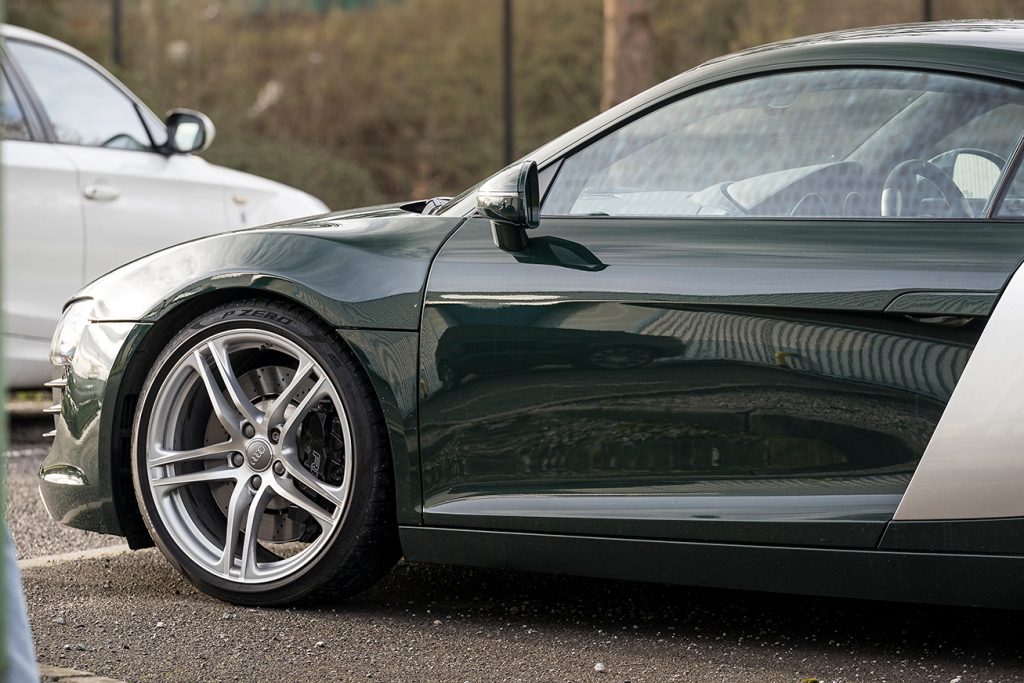
Construction and handling response
The internal construction of a tyre, including its belts, carcass and sidewall characteristics, influences how it responds to steering inputs and changing loads.
This can affect steering precision, cornering stability and the feeling of connection between the front wheels and the road.
Comfort, noise and refinement
Performance is not always about outright grip. Manufacturers also consider how a tyre behaves over uneven surfaces, how much vibration it transmits into the cabin and the noise it produces at cruising speeds.
A tyre developed for a premium saloon may prioritise a different balance of refinement and responsiveness from one designed for a focused sports car.
Rolling resistance and vehicle systems
Tyres also influence energy consumption, braking and the way a vehicle’s electronic control systems interact with the road.
Rolling resistance can affect fuel consumption and electric-vehicle range. Tyre characteristics can also influence the behaviour of systems such as ABS, stability control and traction control.
Homologation allows manufacturers to validate the tyre against their own vehicle requirements rather than relying solely on standard dimensions and ratings.
What are the benefits of replacing like for like?
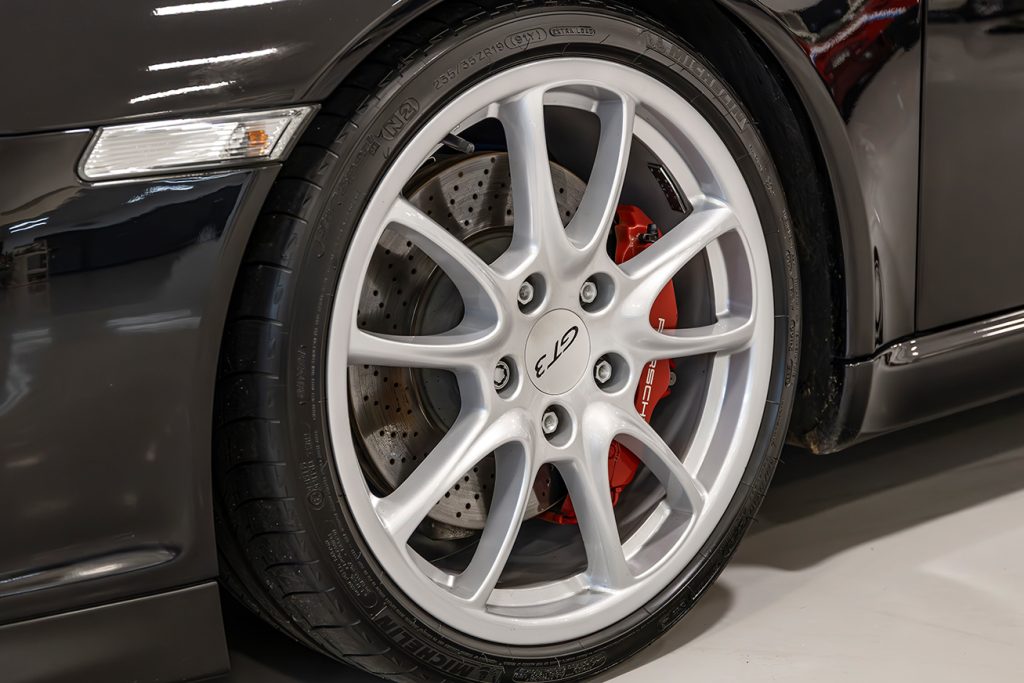
If your car was originally equipped with a homologated tyre, replacing it with the equivalent approved specification can help preserve the characteristics the manufacturer intended.
Vehicle manufacturers spend months, sometimes years, designing, testing and developing vehicles for their intended purpose, then, a tyre manufacturer works with them to deliver the perfect tyre to compliment it. Your car tyres have a very important but small contact patch on the road, so replacing them with like-for-like OE marked tyres will help keep your car performing as the vehicle manufacturer intended.
How you can identify Homologated tyres.
The quickest and easiest way to identify a homologated OE marked tyre is to look at the tyre sidewall and looking for an OE Mark. Now unfortunately OE Marks don’t say Porsche, or BMW, they use a series of letters, numbers and sometimes symbols which translate to an OE Mark, for example BMW has a star symbol, Porsche can have N0. Some Vehicles manufactures have more than one mark, Porsche for example has multiple, N0, N1, N2,NA0, ND1, NF0 and more.
The OE Mark is usually close to the size on the sidewall but not necessarily right next to it, sometimes they can be far away from the size, so it’s best to look round the whole sidewall to spot the OE Mark.
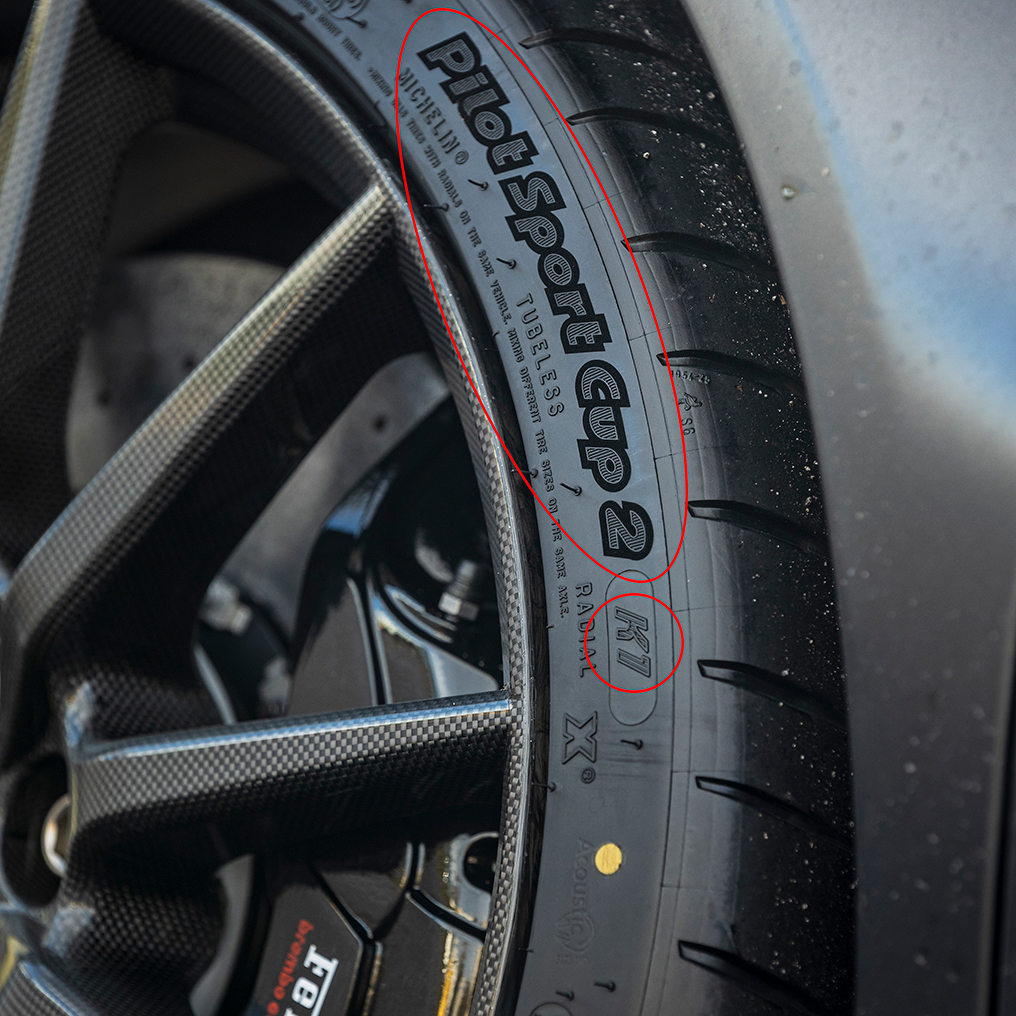
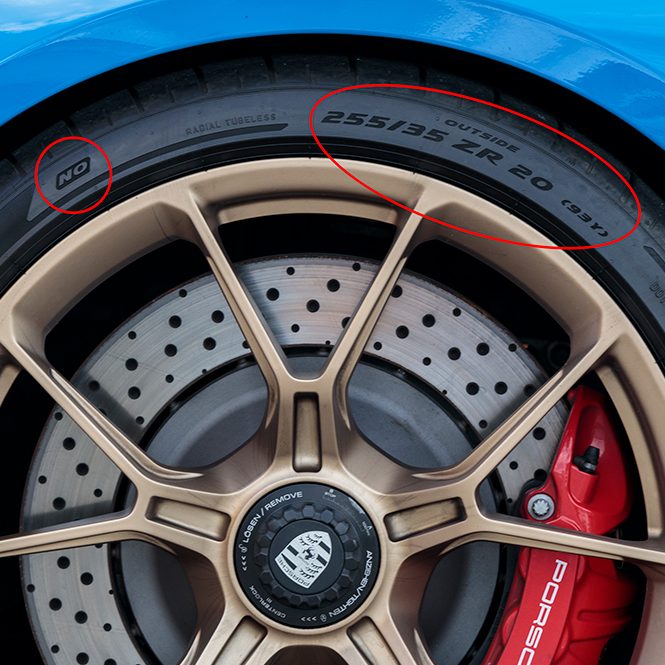
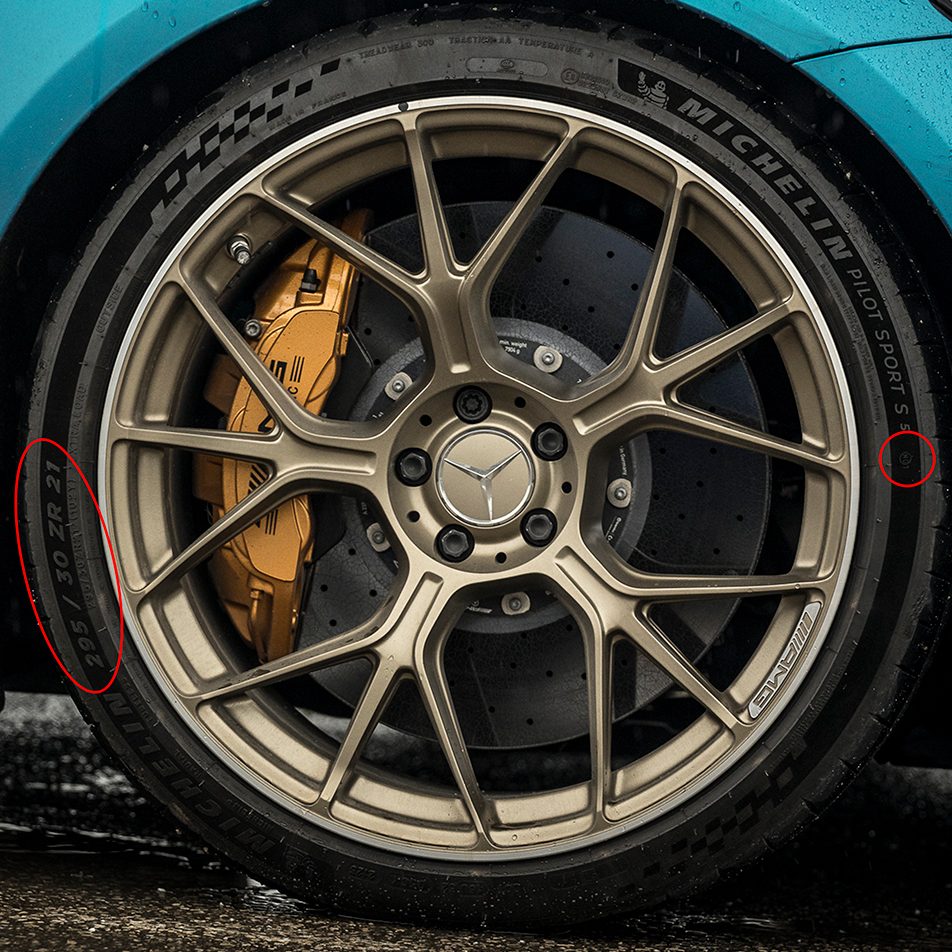
Above we have different examples of where the homologation marking can be in correlation to where the tyre size is displayed.
You can also check in your vehicle handbook or speak with your vehicle manufacture to check the size and homologation/OE Mark requirements for your specific vehicle.
Final Thoughts
Homologated and OE-marked tyres are developed to complement the characteristics of specific vehicles, from handling and comfort to efficiency and refinement. Knowing how to identify the correct OE marking can therefore help you replace your tyres with the specification intended for your car.
If you need an OE-marked tyre, you can find a wide range available through Demon Tweeks, or speak to one of our specialists for help finding the correct option for your vehicle.
Email: sales@demon-tweeks.com
Or, call: 01978 664468
Monday to Friday 8:30am-5:00pm
Saturday 9am-4pm