
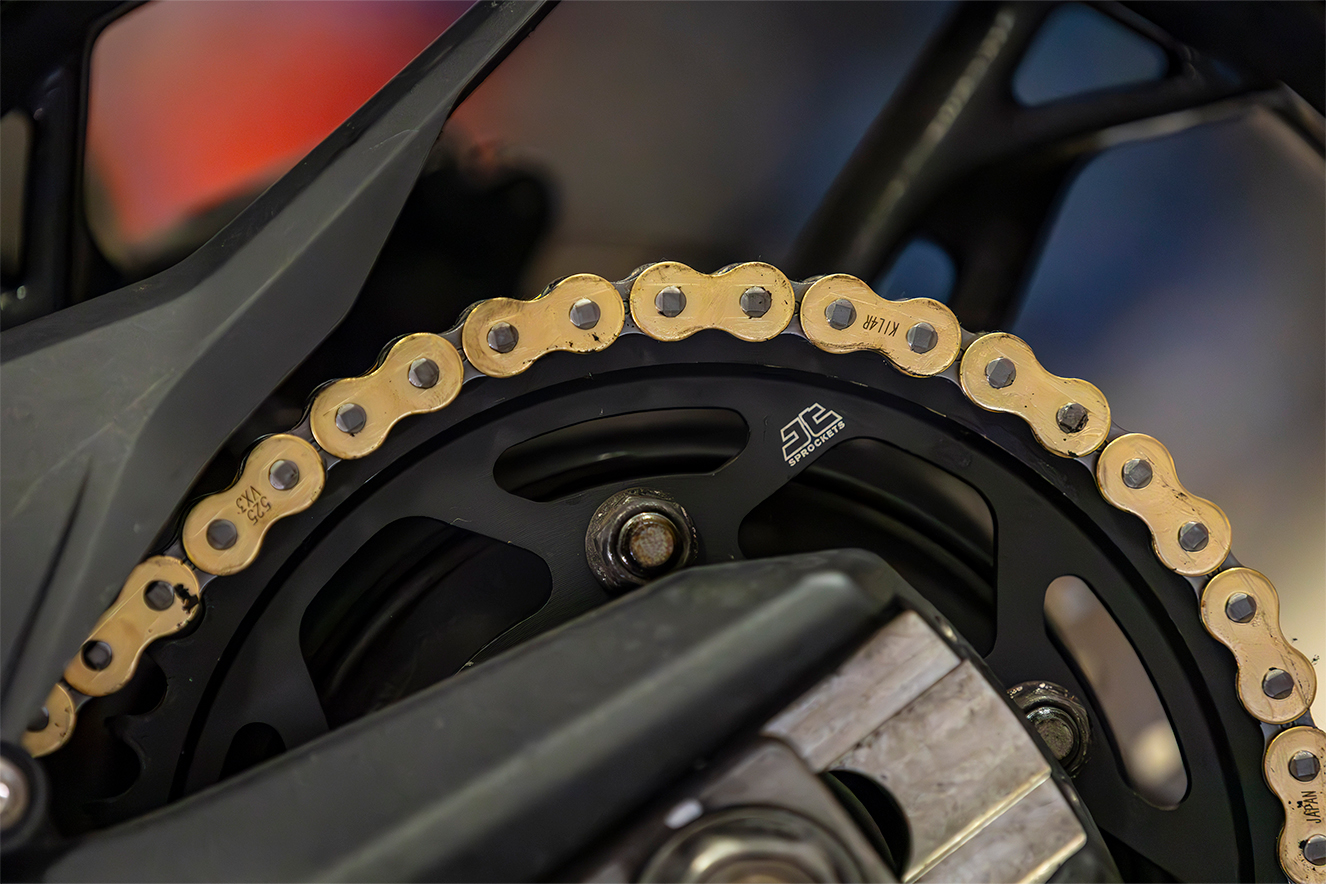
Whether you’re new to two wheels, or you’ve been riding for years, an area you must know is the final-drive system – and how incredibly hard it works on every journey.
Your chain and sprockets are responsible for delivering the engine’s power to the rear wheel. The quality, condition and setup of these components have a huge impact on performance, smoothness, durability and overall ride experience. Understanding the different options available, and how to look after them can help every motorcyclist make better choices for their bike and riding style.
Front Sprockets: Small Component, Big Difference
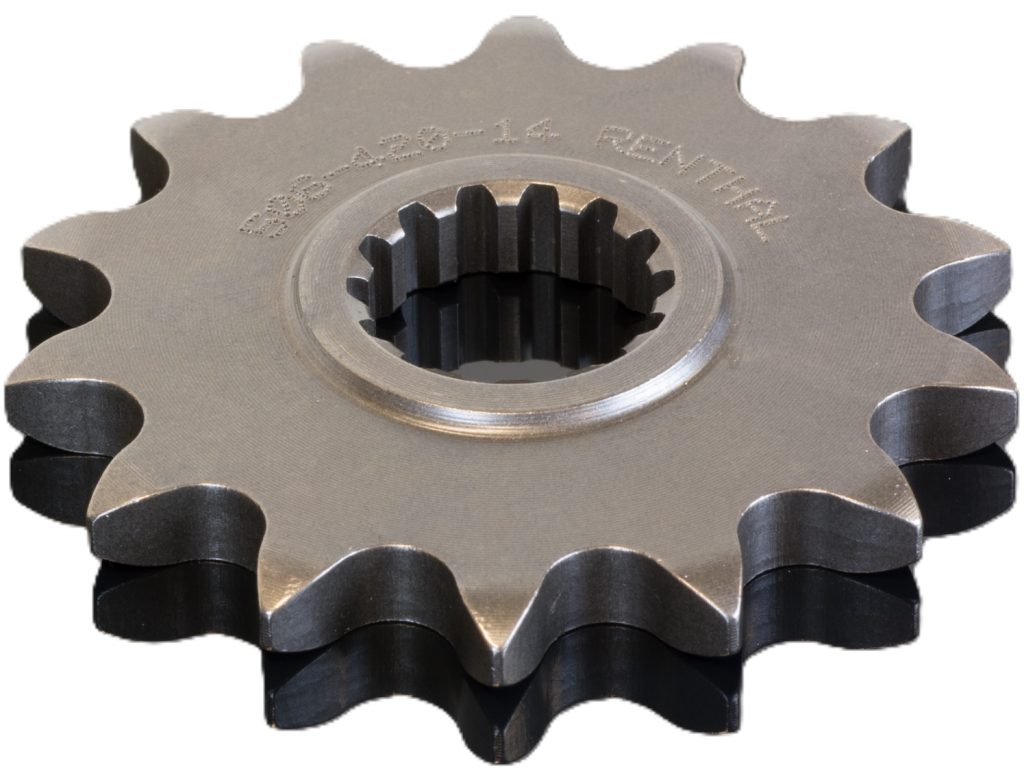
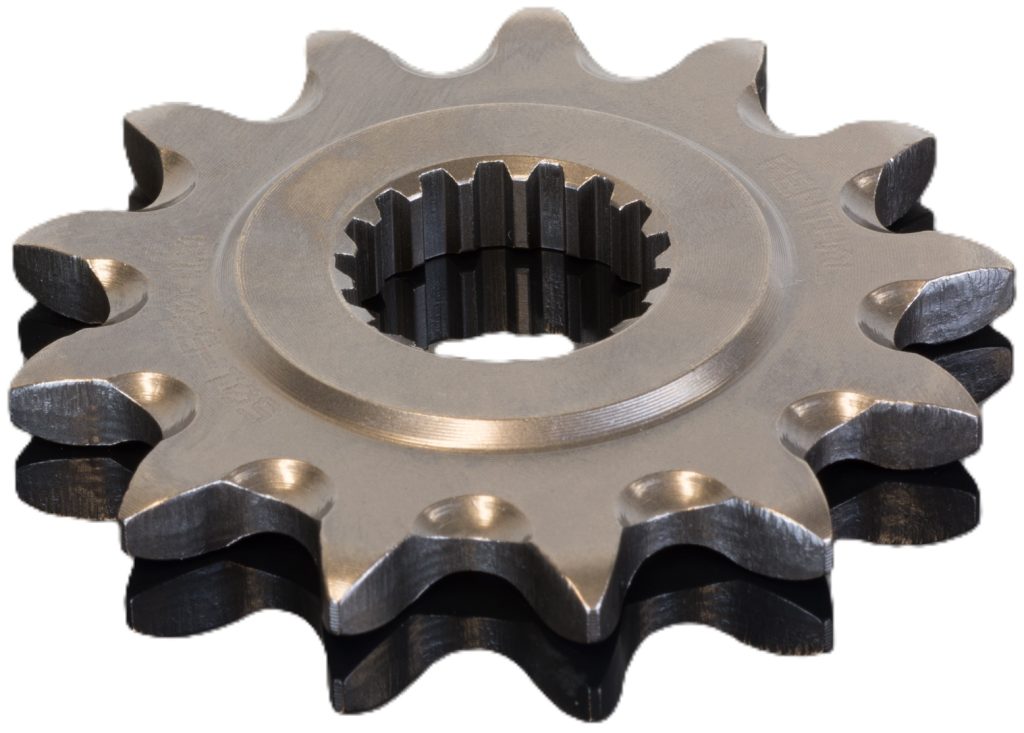
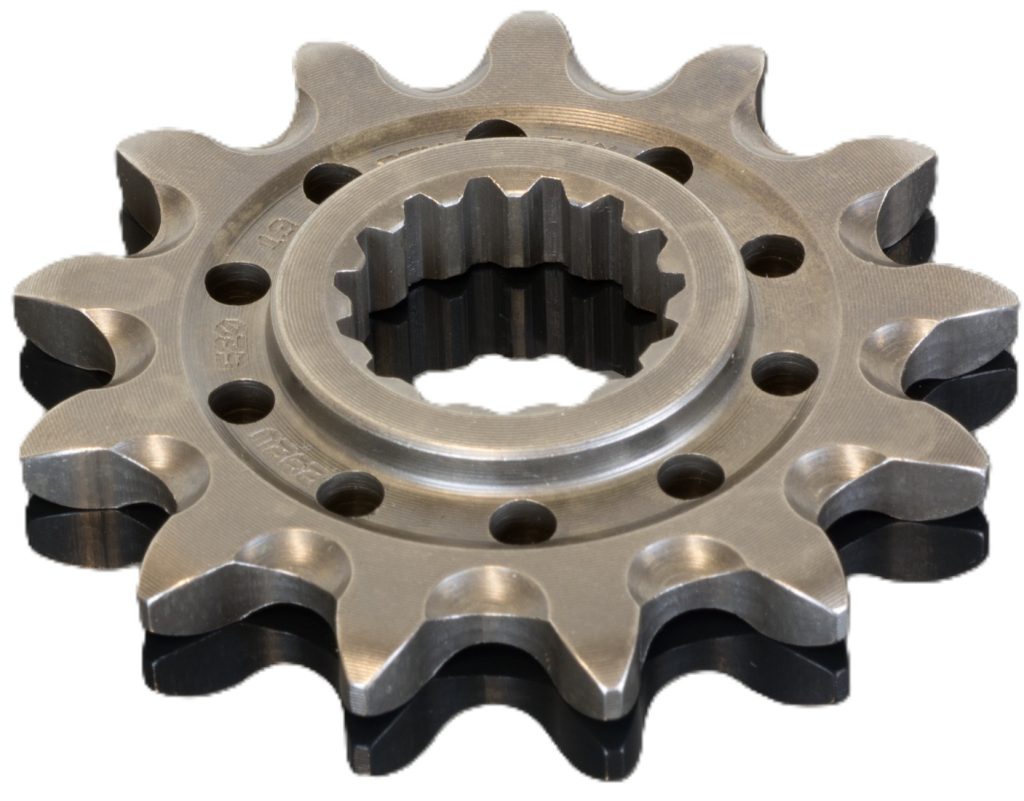
The front sprocket is one of the most heavily loaded parts of the drivetrain, yet it’s also one of the smallest. A standard steel front sprocket is the most common option, offering excellent strength, durability and value. It’s designed to cope with the constant torque passing through it and is ideal for everyday riders and commuters.
Lightweight front sprockets are also popular among performance-focused riders. By using thinner profiles or clever weight-saving cut-outs, these sprockets help reduce rotational mass, giving the engine a slightly freer feel. While the difference isn’t dramatic, it can make throttle response feel a little sharper – particularly desirable on sports bikes and track machines.
For riders who regularly encounter dirt, mud or wet conditions, self-cleaning front sprockets provide a major advantage. Their grooves help push debris away from the chain, reducing wear and helping the drivetrain operate more smoothly. This makes them a smart choice for off-road, adventure or winter riding.
Rubber-cushioned front sprockets add another layer of refinement. Featuring a bonded rubber ring around the teeth, they absorb vibration and reduce chain noise – particularly useful for motorway riding or older bikes that could benefit from a smoother feel. Many modern motorcycles are fitted with these from the factory.
Rear Sprockets: Where Strength Meets Performance
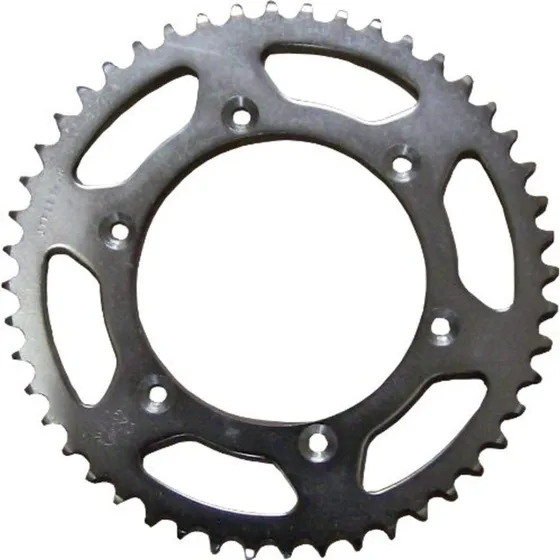
Rear sprockets come in a variety of styles and materials, each offering different benefits. Standard steel sprockets are the most durable and are ideal for riders covering big miles or wanting maximum longevity. They resist wear extremely well, making them the preferred choice for touring, commuting and all-weather riding.
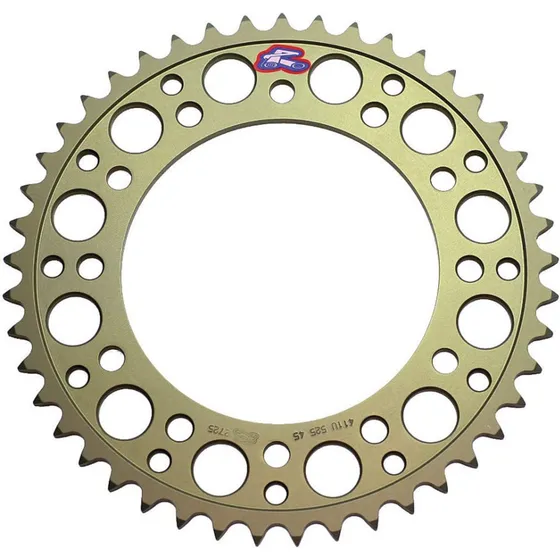
Ultra-lightweight aluminium sprockets offer a reduction in unsprung mass, helping improve handling and giving the bike a more responsive feel. These are especially popular among track riders and performance enthusiasts, though they do wear faster than steel and may require more frequent replacement.
Self-cleaning rear sprockets offer the same mud-shedding benefits as their front counterparts, helping to maintain smooth, efficient chain movement during off-road or harsh conditions.
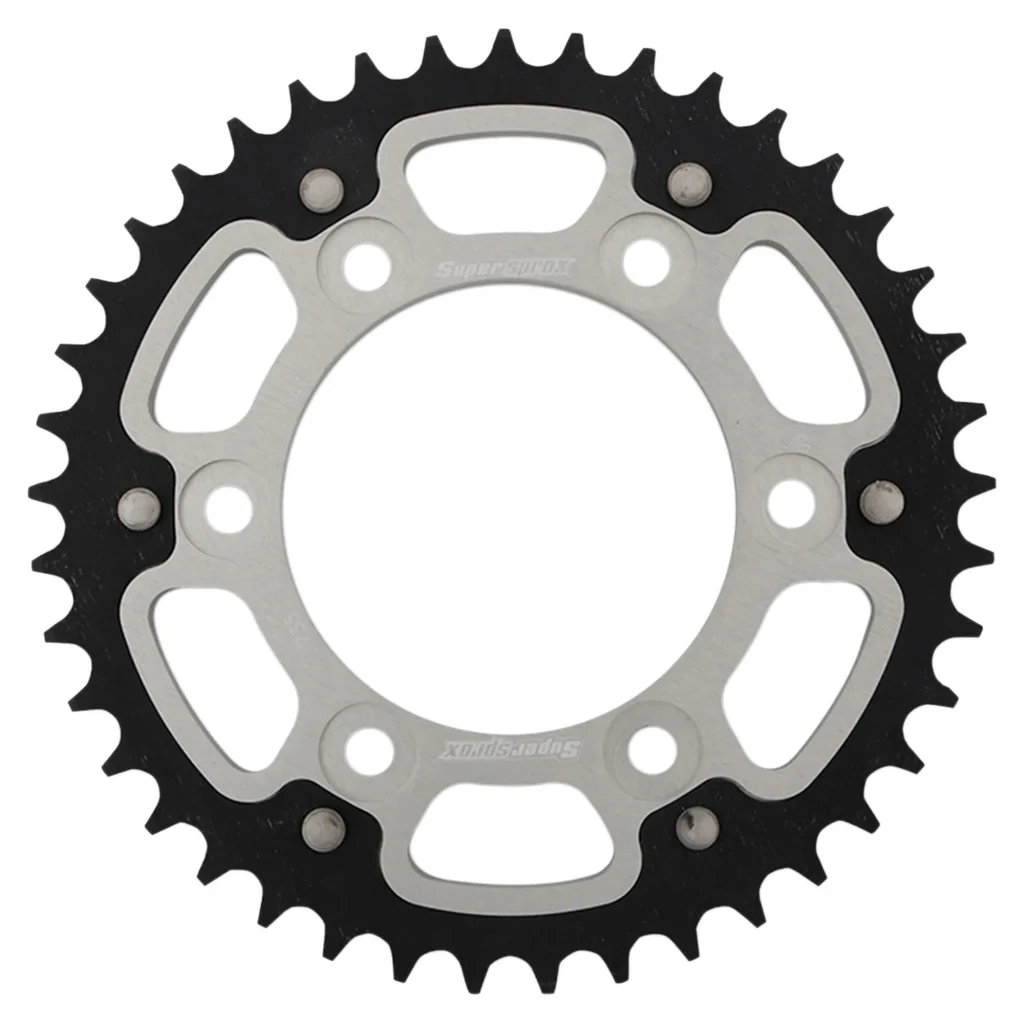
At the premium end are bi-metal sprockets such as Supersprox Stealth designs. These combine a durable steel outer ring with a lightweight aluminium centre, giving riders the longevity of steel with much of the weight-saving advantage of aluminium. They’re a great choice for those wanting high performance without sacrificing durability.
Drive Chains: Understanding Seal Types and Why They Matter
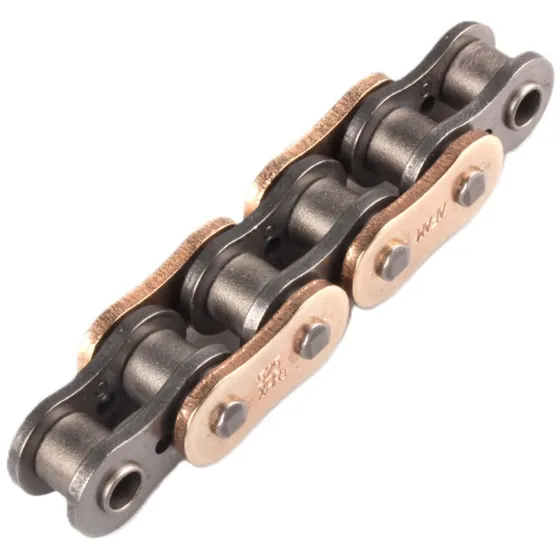
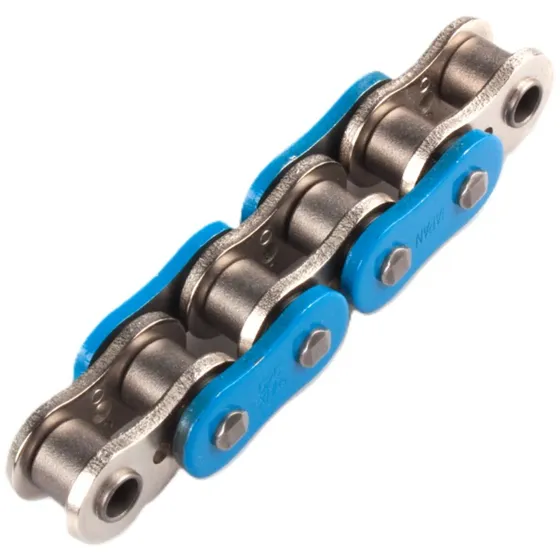
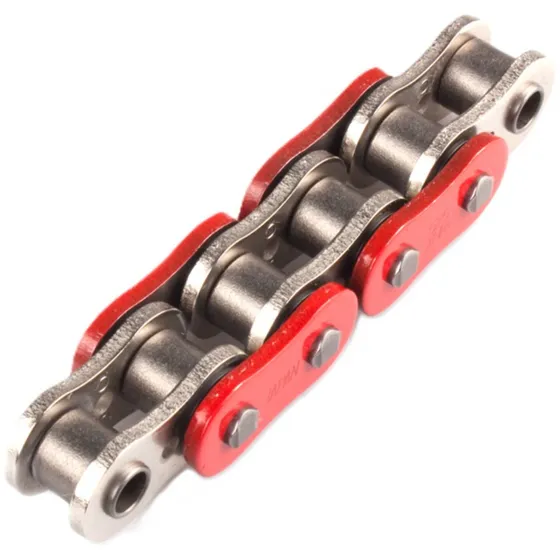
The chain is just as important as the sprockets, and the type of sealing used determines how well it retains lubrication and resists dirt. Sealed chains dramatically increase lifespan and reduce the need for maintenance compared to traditional non-sealed types.
O-ring chains feature simple circular rubber seals between the inner and outer links. These seals hold grease inside and keep dirt out, offering reliable performance at an affordable price. They’re ideal for everyday riders.
X-ring chains improve on this with seals shaped like an “X,” reducing friction and offering better lubrication retention. The result is smoother running and longer life – making them a favourite for road riders and those seeking an upgrade.
More advanced seal designs, including XS-ring, Z-ring and quad-ring types, maximise efficiency and durability even further. These chains are perfect for high-mileage riders, adventure touring or high-performance motorcycles where lifespan and efficiency are top priorities.
Gearing Changes: Why Riders Choose Them and What You Should Know
Some riders choose to go beyond standard OEM gearing and adjust the number of teeth on their front or rear sprocket. These gearing changes can transform the feel of a motorcycle, affecting acceleration, cruising comfort, fuel economy and overall rideability.
Lowering the gearing: By fitting a smaller front sprocket or a larger rear sprocket – gives quicker acceleration and a more lively, responsive feel. The bike will reach its powerband more readily and feel punchier when exiting corners or overtaking. However, it will also rev higher at the same road speed, which may increase fuel consumption and engine noise on longer motorway rides.
Increasing the gearing: Using a larger front sprocket or a smaller rear – reduces engine revs at cruising speeds, offering a smoother, more relaxed and more economical ride. This is especially beneficial for long-distance touring. The trade-off is slower acceleration and a slightly lazier feel at low speeds or when overtaking.
It’s important to be aware that gearing changes may affect speedometer accuracy, particularly on motorcycles where the speed sensor measures front sprocket rotation. Adjusting the gearing too drastically may also alter chain angle or tension behaviour, so changes should be made carefully.
Simple Gearing Change Guide
| Type of Change | What You Do | What It Feels Like |
| Lower Gearing | Smaller front sprocket or larger rear sprocket | Quicker acceleration; more lively and responsive |
| Higher Gearing | Larger front sprocket or smaller rear sprocket | Smoother, more relaxed at speed; lower engine revs |
How to Check for Wear on Your Chain & Sprockets
Regular checks can dramatically extend the lifespan of your drivetrain and prevent costly failures. Start by inspecting the chain slack. Chains naturally stretch over time, and if you find yourself adjusting it more frequently, it may be nearing the end of its life.
Next, examine the sprocket teeth. Healthy sprocket teeth have a symmetrical shape, but worn ones often appear pointed, hooked or “shark-finned.” If your sprockets show this kind of wear, they should be replaced – preferably along with the chain to ensure even wear.
Inspect the chain links themselves for stiffness or rust. Each link should pivot freely; seized or stiff links indicate wear or lack of lubrication. A classic test is to try to pull the chain away from the rear sprocket at the 3 o’clock position. If you can expose a noticeable gap between the chain and sprocket, the chain is worn and needs replacing.
Catching wear early prevents uneven performance, chain skipping, vibration and even potential chain failure.
How to Maintain Your Chain & Sprockets
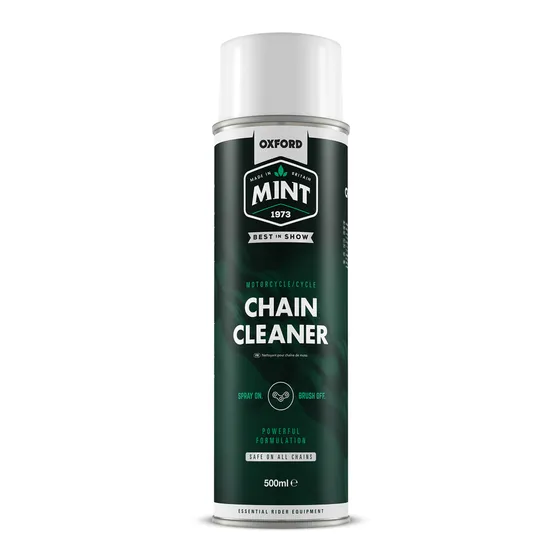
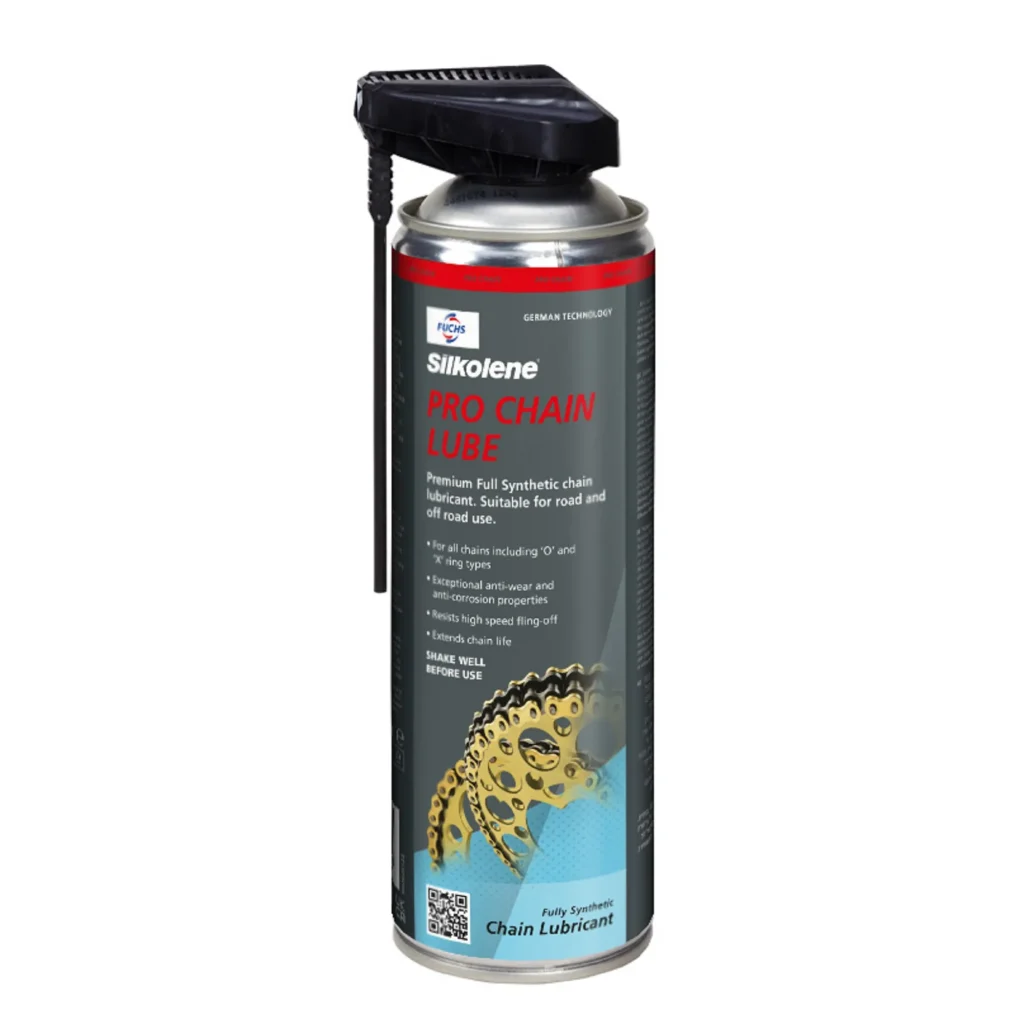
Good maintenance keeps your drivetrain smooth, efficient and long-lasting. Begin with regular cleaning using a motorcycle-safe chain cleaner and a soft brush. This removes grit and old lubricant, preventing abrasive wear on the chain and sprockets.
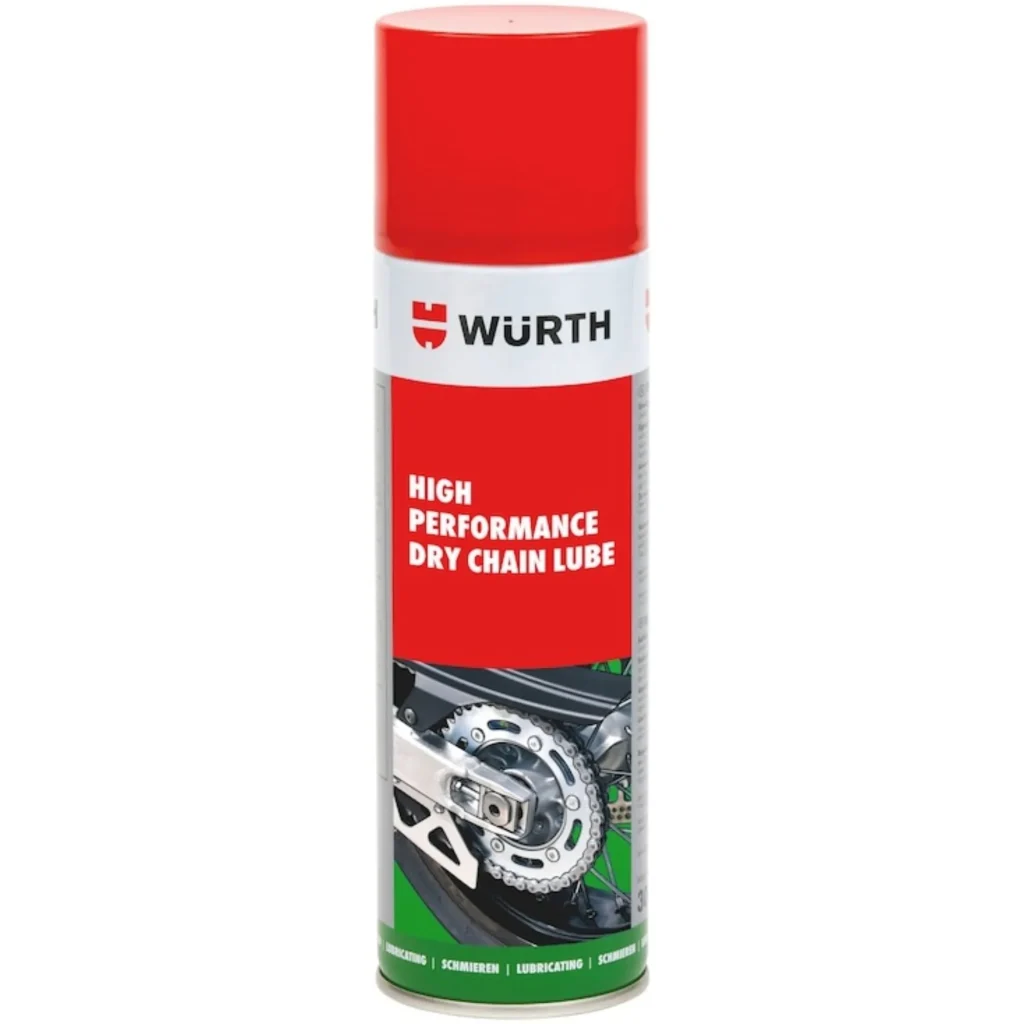
After cleaning, proper lubrication is essential. You can use chain lube or chain wax, each offering benefits. Chain lube penetrates effectively into the rollers, making it ideal for high-speed riding where friction is high. Chain wax creates a more protective coating, resisting water and road grime—particularly useful for winter riders and commuters. Applying lubricant after a ride, when the chain is warm, ensures the best penetration and protection.
Maintaining correct chain tension is equally important. A chain that’s too loose can skip or create jerky throttle response, while one that’s too tight puts excessive strain on the gearbox, swingarm and sprockets. Always measure slack at several points in the chain’s rotation and adjust according to your motorcycle’s specifications.
With a clean, well-lubricated and correctly tensioned chain, your bike will feel smoother, quieter and more responsive.
Chain Adjustment: Why It Matters and How to Do It
Correct chain tension plays a crucial role in how your motorcycle behaves. Too much slack causes clunking, uneven acceleration and excessive chain noise, while a chain that’s too tight restricts suspension movement and increases wear on the gearbox output shaft and wheel bearings. Over-tightening is a common mistake and can lead to costly damage, so it’s important to adjust the chain properly and check it regularly.
Signs that your chain needs adjusting include increased noise, jerky throttle response, snatching at low speeds or the chain visibly sagging. If the bike feels harsh over bumps or begins to whine at speed, it may also indicate that the chain is too tight. Chains naturally stretch over time, so periodic adjustment is a normal part of maintaining your motorcycle.
For motorcycles with a standard swingarm, the adjustment process is straightforward. With the bike on a stand, the rear axle nut is loosened and the adjuster bolts on both sides of the swingarm are turned evenly to fine-tune the tension. Tightening the adjusters moves the wheel backwards to reduce slack; loosening them allows the wheel to move forwards to increase slack. It is essential to ensure that the adjuster marks on both sides match precisely, keeping the wheel correctly aligned. The chain slack should be measured at the midpoint between the front and rear sprockets and compared with the manufacturer’s recommended specification. Once the correct tension is achieved, the axle nut is tightened to the correct torque setting and the chain is checked for tight spots by rotating the rear wheel.
Motorcycles with a single-sided swingarm use a different system, typically involving an eccentric hub. Instead of adjusting both sides of the wheel individually, the swingarm pinch bolts are loosened to allow the hub to rotate. Turning the eccentric hub tightens or loosens the chain, and because the alignment is built into the mechanism, the rear wheel remains perfectly straight throughout the process. Once the correct amount of slack has been set—again following the motorcycle manufacturer’s recommendation—the eccentric is locked back into position by tightening the pinch bolts to the correct torque. This design makes chain adjustment quick, precise and particularly user-friendly, which is one reason why single-sided swingarms are common on premium motorcycles.
Whichever system your motorcycle uses, proper chain adjustment ensures smoother acceleration, reduces wear across the drivetrain and improves overall safety. It is one of the simplest yet most important maintenance tasks a rider can perform.
Choosing the Right Setup for Your Riding
There’s no universally perfect chain and sprocket setup – only the setup that’s perfect for you and your bike. Commuters often prefer the durability of steel sprockets paired with an X-ring chain. Adventure riders benefit from self-cleaning sprockets that withstand harsh terrain. Performance riders may choose lightweight sprockets and premium low-friction chains for sharper throttle response. Tourers looking for long-distance reliability often select the most durable, maintenance-friendly combinations available.
Whatever your riding style, investing in the right components – and maintaining them properly – keeps your motorcycle running smoothly, efficiently and safely. A healthy chain and sprocket kit transforms the riding experience and ensures you get the most enjoyment and performance from every mile.